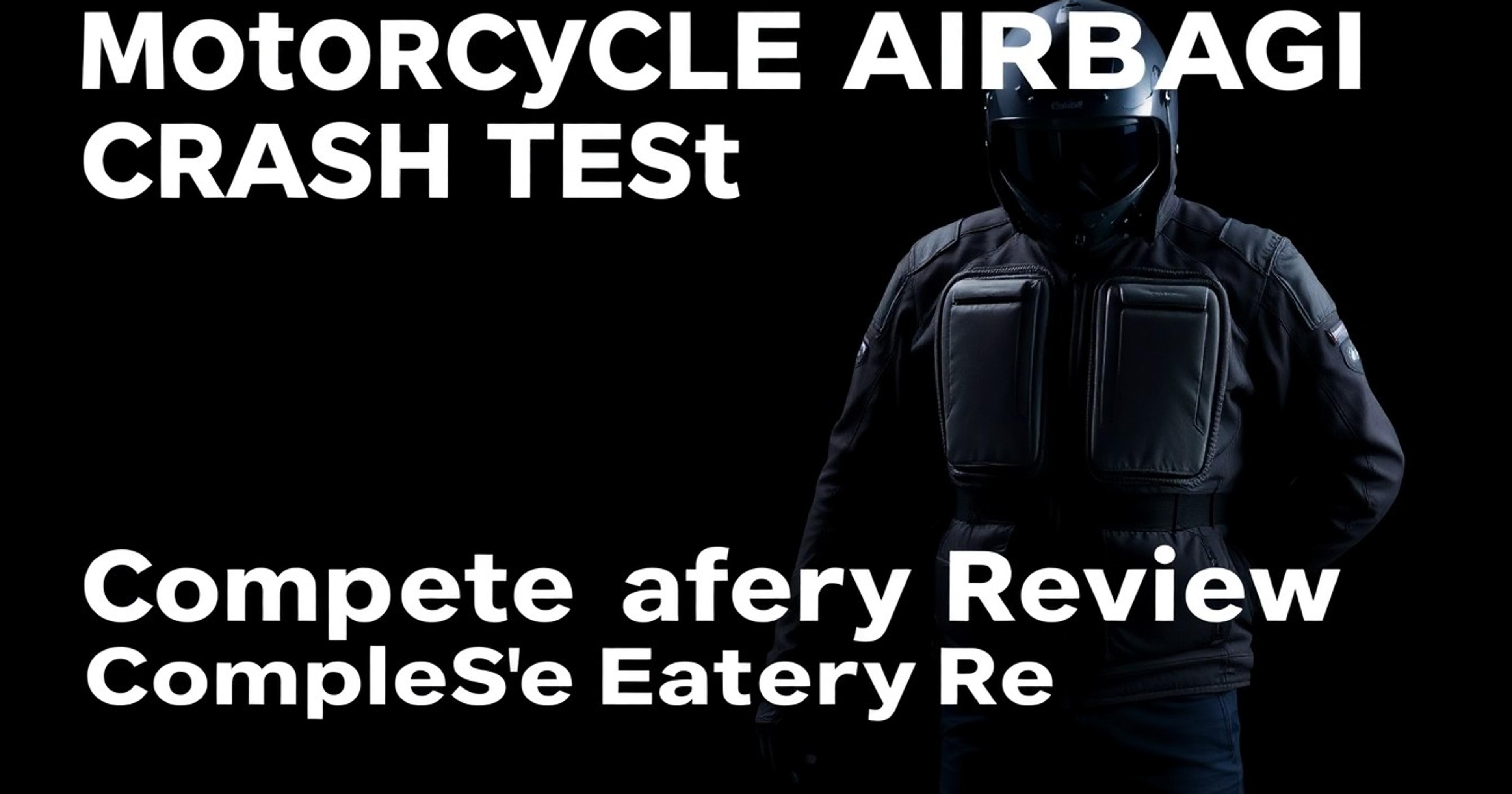

Airbag vests are the biggest change in rider protection since back protectors went mainstream, and they're also the most confusing gear to shop for. Tethers or sensors, certifications that don't quite cover what you think, subscriptions, gas canisters, batteries. We haven't crash-tested any of them, and nobody should trust a magazine that says it did without lab data to show for it. What we can do is explain how these systems work, what the labels mean and what they really cost to own.
Do motorcycle airbag vests actually work?
They add a kind of protection foam armour can't: a cushion of gas over the chest, ribs, spine and collarbones that inflates in a fraction of a second. But an airbag is only as good as its trigger, its fit and your habit of actually wearing it charged and armed.
Manufacturers make big claims. Alpinestars, for example, says its Tech-Air 10 reduces impact force by up to 95% compared with a passive protector. That's the company's figure, not an independent result, so treat any single number like that with healthy suspicion. The honest takeaway is simpler: an airbag covers more of your torso than a back protector alone, and that's where a lot of serious injuries happen.
Tethered or electronic: what's the difference?
Tethered vests fire when a cord attached to the bike gets yanked. Electronic vests fire when sensors and software decide you're crashing. Both inflate with stored gas. The trade-off is simplicity versus coverage of more crash types.
Tethered (mechanical) airbags
You clip a lanyard to the bike's frame. When you separate from the motorcycle, the cord pulls a firing pin, punctures a CO2 canister and fills the bag. Bennetts' review of the Helite Turtle 2 describes inflation within 80 ms once the tether reaches full extension.
The upsides: no battery, no app, no firmware, and the owner can screw in a new canister after a deployment. The downsides are just as mechanical. It only fires when the tether stretches all the way, it's unlikely to fire if you're hit while stopped, and you have to remember to clip in and unclip every single time. Forget the second part and you'll inflate yourself in a parking lot while your friends film it.
Electronic airbags
Sensors read your movement constantly and an algorithm decides when to deploy. Alpinestars' Tech-Air FAQ says its systems use three accelerometers and three gyroscopes sampled 1,000 times per second. In&motion says its In&box module runs 1,000 analyses per second and goes from fall detection to full inflation in under 60 ms.
No cord means no forgetting to clip in, and electronic systems can respond to crashes where you don't fly off the bike. The cost is a battery to charge, software to update and a vest that may not understand walking. Alpinestars itself warns that its algorithm isn't designed for use off the bike, so take it off or disarm it when you park.
What does EN 1621-4 actually certify?
Less than many buyers assume. EN 1621-4:2013 covers mechanically activated inflatable protectors, setting minimum protection levels, intervention time and coverage. The standard explicitly says inflatable protectors that aren't mechanically activated are outside its scope.
That means an electronic vest can't be fully certified to EN 1621-4 as written, and even some tethered vests aren't. Bennetts reported that Helite's Turtle 2 is not certified to EN 1621-4 and uses a different certification route instead. Bennetts also noted that a separate standard covering electronic triggering, EN 1621-5, was in the works, so check what any new vest is certified to at the time you buy.
So read the label carefully. A "CE Level 2" claim may refer to the foam back protector inside the vest rather than the airbag itself. Ask what exactly was certified, and to which standard.
Which airbag systems should you know about?
Four names come up constantly in North American shops. Here's what each one is, based on manufacturer pages and published reviews, not our own testing.
- Alpinestars Tech-Air: electronic, no bike sensors. The lineup runs from the commuter-focused Tech-Air 3 (worn over or under a jacket) to the Tech-Air 5 for road and touring and the race-oriented Tech-Air 10. The Tech-Air 5 covers shoulders, chest, ribs, collarbones and full back, with switchable street and race algorithms.
- Dainese Smart Jacket: an electronic airbag vest that, per the Smart Jacket FAQ, can be worn over or under any jacket. Dainese says it's designed for road use, can recognize the risk of a rear-end collision while stationary on conventional motorcycles, and discourages off-road riding.
- Helite Turtle 2 and e-Turtle 2: the Turtle 2 is tethered and worn over your gear. The e-Turtle 2 uses the same bag with an electronic trigger, and Bennetts reports it only fires in impacts at 11 mph or more.
- In&motion: a removable "brain" that clips into partner vests such as the Klim Ai-1. No bike sensors, user-replaceable inflator, and a choice between subscribing or buying the module outright.
How much does an airbag cost to own?
More than the sticker price, because every deployment, battery and service visit has a cost attached. Here are figures from manufacturer pages and reviews, in US dollars as listed when we checked. Canadian prices differ and everything moves.
Buying in
Alpinestars lists the Tech-Air 3 from US$399.95, the Tech-Air 5 at US$649.95 and the Tech-Air 7X at US$1,099.95. Klim lists the Ai-1 vest at US$299.99, plus the In&box at US$399 to buy or US$12 a month or US$120 a year by subscription, with an extra fee for Adventure mode. Rider Magazine's review of Dainese's Smart Air vest put it at US$749.
After a crash
Alpinestars' FAQ lists a Tech-Air 5 repack at US$179 for new canisters, or US$299 when the bladder is replaced too, which happens every third repack. The Tech-Air 3 is US$99 and US$199. Both go back to an authorized service centre. Klim says the In&motion inflator is user-replaceable after each deployment and the vest is designed for three inflations. Rider Magazine found Smart Air cartridges cost US$139, are user-replaceable and the bag is good for three deployments. Dainese says the Smart Jacket's bag gets replaced at an authorized centre after each activation.
Batteries and upkeep
Alpinestars rates the Tech-Air 5 at 30 hours of riding per charge and the Tech-Air 3 at 40. Dainese claims over 26 hours for the Smart Jacket, with a full charge taking about four hours, and recommends a free service inspection after the first three years. In&motion claims about 30 hours for its In&box, while Klim's page says about 25. Tethered vests skip this whole section, which is half their charm.
Who should buy an airbag vest?
Anyone who rides regularly in traffic and can afford one should seriously consider it. Montreal commuters dodging left-turners on Saint-Denis, touring riders putting in long days and track-day regulars are the obvious candidates.
Match the system to your riding. Alpinestars says the Tech-Air 5 handles light off-road use in street mode but not motocross or jumps, and Dainese steers Smart Jacket owners away from off-road riding entirely. If you hate charging things, a tethered vest is cheaper and simpler, as long as you're disciplined about the lanyard. If you ride track days, check which algorithms your system offers.
An airbag doesn't replace anything else. You still need a properly rated helmet, abrasion-resistant gear and limb armour. Our guides on choosing a safe motorcycle helmet, motorcycle armour and protective riding gear cover the rest of the kit.
What should you check before buying?
Five questions save most of the regret.
- Does it fit with your jacket? Alpinestars says the Tech-Air 5 works under a properly fitting textile jacket, but a leather jacket needs about 4 cm of room around the chest unless it's Tech-Air Ready. A vest that can't expand can't protect.
- What exactly is certified? Airbag, back protector or fabric. Ask for the standard by name.
- Where's the nearest service centre? A vest sitting in a shipping box after a crash isn't protecting anybody, so know the turnaround before you need it.
- What happens if you stop paying? For subscription systems, read the terms before you commit.
- Will you actually charge it? Be honest. A dead electronic vest is just an expensive, slightly warmer shirt.
Our take
We'd rather see a rider in a mid-range helmet and an airbag vest than in a carbon race lid and a leather jacket with no armour. Pick the system you'll wear every ride, armed and charged, and budget for at least one repack from day one.
Editor's note: this article was rewritten in October 2026. An earlier version described product tests GothRider Magazine never ran. Ratings and specifications now come from the manufacturers and independent testing bodies linked above.